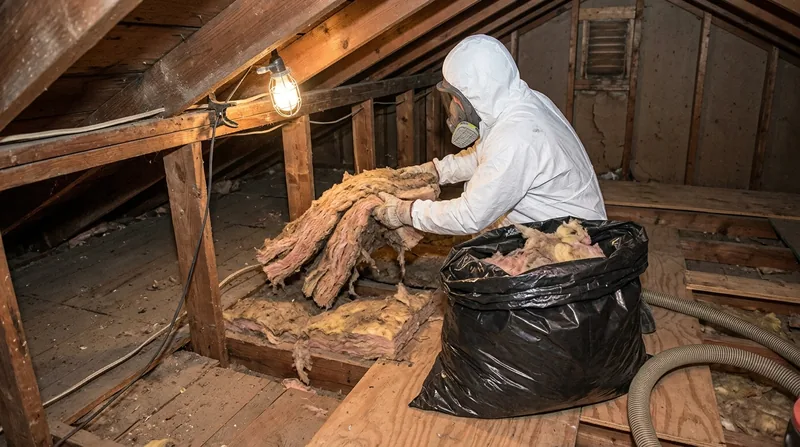




Pensacola's humid Gulf coast climate turns old insulation into a liability faster than most homeowners realize. Whether your attic still holds fiberglass that's absorbed moisture for decades, or you've got failed foam from a previous contractor that needs removal before we install new material, insulation removal in Pensacola is the foundation of every retrofit we do. The vented attics that dominate East Hill cottages, Cordova Park ranches, and newer subdivisions toward Pace and Milton pull in hot, damp air for most of the year, and whatever insulation sits in that space gets saturated. We remove the old material from attics, walls, and crawl spaces across Escambia and Santa Rosa counties, haul it away, and prepare the cavity for new foam that actually seals and protects. This isn't a glamorous job, but it's the one that determines whether your retrofit works or fails.
Why Insulation Removal Matters in Pensacola's Hot, Humid Climate
Old insulation in Pensacola attics doesn't just lose R-value over time. It becomes a sponge for the moisture that drives through walls and roof decks nine months a year in our climate zone 2A hot-humid environment. Fiberglass batts and blankets settle and compress, trapping humidity instead of blocking the Gulf coast heat load. Foam that was sprayed without proper ventilation or ratio control can off-gas indefinitely, creating odor and air quality issues that homeowners can't escape. Before any new spray foam system goes in, the old substrate has to come out completely and the cavity has to be clean, dry, and ready for installation.
- Compressed or saturated fiberglass loses its thermal resistance and holds moisture that promotes wood rot in joists and rafters.
- Blown-in cellulose that has settled or been exposed to humidity becomes an insulating liability and a fire load in attic spaces.
- Failed foam installations with improper thickness, ratio, or ventilation must be removed to prevent re-entry and VOC issues for occupants.
- Wet insulation in crawl spaces under Pensacola homes on slab foundations keeps humidity high year-round and feeds mold growth in rim joists and band joists.
- Removal exposes the actual condition of framing and sheathing so water damage, structural issues, or pest damage can be addressed before new foam is applied.
Getting the old material out is not optional; it's the prerequisite for a system that will actually perform in Pensacola's climate.
Key info: Florida building code requires that all existing insulation be removed and the cavity inspected before new foam installation, and that inspection is your protection against hidden damage or moisture that would compromise the retrofit.
For details on what the code requires in your neighborhood, contact your local building department. Pensacola, Gulf Breeze, Ferry Pass, and other Escambia and Santa Rosa municipalities each have their own permitting and inspection protocols, and we help homeowners navigate what applies at their address.
How We Remove Insulation in Pensacola Attics, Walls, and Crawl Spaces
Insulation removal is methodical work that requires containment, ventilation, and proper disposal. We start with a site inspection to identify what material is in place, its condition, and whether the substrate is wet or contaminated. If moisture is present, we document it and address the source before removal proceeds. We set up negative air pressure and dust containment in the work zone, remove all old insulation by hand or mechanical means depending on the material type and attic geometry, and haul everything off site to a licensed waste facility. Once the cavity is clear, we inspect for damage, verify that the space is dry, and prepare it for new foam installation. The whole process typically takes one to two days depending on attic size and accessibility.
- We inspect the attic or wall cavity and identify the insulation type, condition, and any signs of moisture, pest activity, or structural damage before we begin.
- We set up containment and negative air pressure to prevent dust and debris from entering living spaces or neighboring areas during removal.
- We remove all old insulation by hand or with equipment designed for the specific material, working methodically to avoid disturbing roof decks or electrical wiring.
- We haul all removed material to a licensed disposal facility and provide documentation of removal and disposal for your records.
- We inspect the cavity, verify dryness, and note any framing damage or moisture sources that need to be addressed before new foam goes in.
Once removal is complete, the space is ready for attic spray foam insulation or whatever retrofit strategy makes sense for your home.
Local example: A 1970s ranch in Cordova Park with original fiberglass batts and no attic ventilation showed moisture staining on the roof sheathing and settled insulation in the cavities. We removed all old material, found no active leak but confirmed high humidity from the vented soffit design, and prepared the attic for closed-cell foam and air sealing to break the moisture cycle.
Removal Methods: Attic, Wall, and Crawl Space Approaches
| Approach | Description | Best For |
|---|---|---|
| Hand removal with containment | Fiberglass batts and blankets removed by hand into heavy plastic bags, with negative air pressure and dust barriers in place throughout the attic and stairwell. | Attics with moderate insulation depth and no active moisture or contamination; standard retrofit prep. |
| Pneumatic removal | Blown-in cellulose or fiberglass vacuumed out with a truck-mounted HEPA system and collection bin, with full containment of the work zone. | Attics with settled or heavily compacted blown-in insulation; crawl spaces where manual removal is impractical. |
| Foam chip and debris removal | Failed or unwanted spray foam broken up, vacuumed, and removed; requires careful handling to avoid foam particles in living spaces and proper containment. | Attics or walls with previous foam installations that failed, off-gassed, or need to be replaced with a different product. |
| Wet insulation and substrate drying | Saturated insulation removed, cavity dried with mechanical ventilation, and framing inspected for rot or damage before removal is complete. | Attics or crawl spaces with moisture damage, roof leaks, or high humidity; we address the source and dry before new foam. |
Insulation Removal Cost in Pensacola: What to Expect
Insulation removal in Pensacola typically starts at $950 for a small attic or wall cavity, and scales up based on the volume of material, the accessibility of the space, and whether moisture or contamination adds complexity to the job. A full attic removal in a 1,500-square-foot home runs between $1,200 and $2,500 depending on insulation type and depth. Crawl space removal is usually higher because access is tighter and containment is more critical. The cost also reflects proper disposal, negative air pressure equipment, and the labor to inspect the cavity once it's clear.
Factors that affect the price include the type of insulation (fiberglass batts are faster than blown-in cellulose or foam chips), the depth and coverage of the existing material, roof framing geometry and attic accessibility, whether moisture or pest damage is present, and how far the disposal facility is from your address. We always provide a written estimate with R-value and thickness specifications before we start, so you know exactly what's being removed and what the cost covers. Getting two or three estimates from different contractors is smart because removal is the foundation of the retrofit and the price should reflect the scope and your local market.
For a detailed breakdown and to discuss your specific job, visit our pricing page or call us at (850) 903-5081 for a free, no-obligation estimate.
Insulation Removal Near Me: What Pensacola Homeowners Should Know When Hiring
Hiring the right contractor for insulation removal is as important as hiring for the foam installation that follows. Start by asking any contractor whether they carry full insurance and can provide a certificate of insurance before work begins. Request a written estimate that spells out what insulation will be removed, how much volume is involved, what containment and ventilation equipment will be used, and where the material will be disposed of. Check references from recent jobs in your neighborhood, particularly in Pensacola, Gulf Breeze, Ferry Pass, or Warrington, and ask whether those homeowners were satisfied with the cleanliness of the work and the timeline.
Verify that the contractor understands local permitting and inspection requirements for your address. If your home is in a historic district or HOA-governed community, ask whether architectural approval is needed for attic work or if any exterior venting changes are planned. Avoid any contractor who promises immediate re-entry to the attic after removal without proper drying time, or who quotes a price far below market without a detailed breakdown. The cheapest estimate is often the one where corners are cut on containment, ventilation, or disposal.
Once removal is complete and the cavity is dry and ready, you'll want to move forward with closed-cell spray foam or open-cell spray foam depending on your climate control and budget goals. Contact us for a free estimate and to discuss whether removal and foam retrofit makes sense for your home.
Insulation Removal in Pensacola: Pricing Guide
| Service | Price | Details |
|---|---|---|
| Small attic or wall cavity removal | Starting at $950 | Fiberglass batts or light blown-in material in accessible attics under 500 square feet, with standard containment and disposal included |
| Full attic removal (1,000-1,500 sq ft) | Starting at $1,400 | Moderate insulation depth, standard fiberglass or cellulose, includes negative air pressure, containment, and licensed disposal facility fees |
| Large attic or crawl space removal | Starting at $1,900 | Deep insulation, blown-in material, or tight attic geometry; includes pneumatic vacuum system, extended containment, and full debris removal |
| Wet insulation or moisture remediation | On estimate | Saturated fiberglass, foam damage, or active moisture requires site inspection to assess drying needs and framing damage before removal quote |
| Travel and equipment setup | Included | No separate mileage fee or travel charge within Pensacola, Gulf Breeze, Ferry Pass, Ensley, Warrington, and surrounding Escambia and Santa Rosa service areas |
| Free written estimate | No charge | Response within 24 hours at (850) 903-5081, includes site inspection, material identification, and detailed scope breakdown with no obligation |
Indicative pricing, the exact cost depends on square footage, finish, and site access. Free personalized estimate within 24h at (850) 903-5081.


