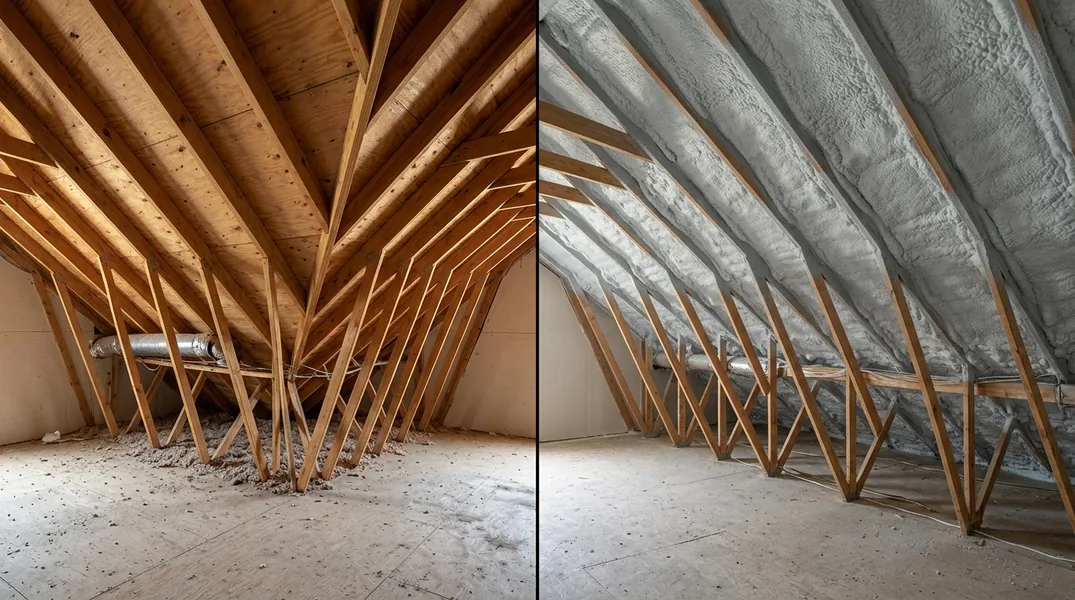
Understanding Open Cell vs Closed Cell Spray Foam
When homeowners in Pensacola begin researching Attic Spray Foam Insulation, one of the first decisions they face is choosing between open cell and closed cell products. Both are spray polyurethane foam insulation materials, but they have distinctly different properties, performance characteristics, and applications. Understanding these differences is essential to making an informed decision that will protect your home and keep your energy bills manageable for years to come.
Open cell and closed cell foams differ primarily in their cellular structure. Open cell foam has cells that are not completely enclosed, allowing air and moisture to pass through the material. Closed cell foam, by contrast, has cells that are tightly sealed, creating a more rigid, moisture-resistant barrier. This fundamental difference affects everything from R-value per inch to cost to how each material performs in Pensacola's humid subtropical climate. The right choice depends on your specific goals, budget, and the condition of your attic space.
Open Cell Spray Foam Insulation: Benefits and Drawbacks
Open Cell Spray Foam Insulation is a lighter, more flexible material that expands significantly during application. It typically provides an R-value of around 3.5 to 3.6 per inch, which is lower than closed cell alternatives, but it remains a solid insulator. One of the primary advantages of open cell foam is its lower cost. Because it uses less material and requires less complex manufacturing, open cell products are generally more affordable upfront, making them an attractive option for homeowners working within a tight budget.
Open cell foam also offers excellent sound dampening properties and allows your attic to remain somewhat breathable, which some builders prefer for traditional vented attic designs. However, open cell foam is not a vapor barrier and does absorb moisture. In Pensacola's humid climate, this means open cell foam in an attic needs to be paired with proper ventilation to prevent moisture accumulation and potential mold growth. Additionally, open cell foam is softer and more prone to damage, so it requires more careful handling during installation and is less suitable for areas where the foam might be compressed or disturbed over time.
Closed Cell Spray Foam Insulation: Superior Performance and Protection
Closed Cell Spray Foam Insulation is a denser, more rigid product that delivers superior insulation performance. With an R-value of 6.0 to 7.0 per inch, closed cell foam requires significantly less thickness to achieve the same thermal resistance as open cell alternatives. This higher R-value per inch makes closed cell foam the better choice for attics where space is limited or where maximum thermal efficiency is a priority.
The sealed cellular structure of closed cell foam creates an effective vapor barrier, which is particularly valuable in humid climates. Closed cell foam resists moisture intrusion, reduces air infiltration, and provides structural rigidity that actually strengthens roof systems. For homeowners seeking a sealed attic insulation solution that creates an unvented attic space, closed cell foam is the industry standard. This approach eliminates the need for attic ventilation, preventing moisture problems, reducing energy loss through air leaks, and creating a more stable indoor environment. The trade-off is that closed cell foam costs more upfront, but the long-term energy savings and superior performance often justify the investment for many homeowners.
Which Type Works Best for Pensacola's Climate
Pensacola's climate presents unique challenges for attic insulation. With high humidity levels, frequent temperature swings, and significant cooling demands during the summer months, your attic insulation must perform reliably year-round. The moisture and heat resistance of closed cell foam makes it exceptionally well-suited to this environment. By creating an unvented attic spray foam system with closed cell material, you eliminate the moisture problems that can plague traditional vented attics in humid regions.
Open cell foam can work in Pensacola, but it requires careful installation and proper ventilation to prevent moisture issues. If you choose open cell foam, your attic must remain vented, which means some of your conditioned air will be lost through those vents. In a humid climate, maintaining proper ventilation is critical but also reduces the efficiency gains you might otherwise achieve. Most insulation professionals in the area recommend closed cell foam for attics because it provides the moisture resistance and air sealing that Pensacola homes truly need. However, your specific situation, budget, and existing attic conditions will ultimately determine which option is best for your home.
Attic Spray Foam Insulation Cost in Pensacola: What to Budget
Cost is understandably a major factor in any insulation decision. Open cell spray foam typically costs between $0.50 and $1.00 per board foot, while closed cell foam ranges from $1.00 to $1.50 per board foot or higher, depending on thickness and local market conditions. For a typical attic project, open cell foam might cost $2,000 to $4,000, whereas closed cell foam could run $4,000 to $7,000 or more. The exact pricing depends on your attic's size, current insulation condition, accessibility, and the R-value target you want to achieve.
While closed cell foam carries a higher initial investment, consider the long-term value. Closed cell foam's superior R-value means you need less material to achieve the same thermal performance, reducing overall thickness and sometimes material costs. More importantly, the energy savings from a properly sealed, unvented attic can pay back the initial investment through lower cooling and heating bills over five to ten years. Additionally, closed cell foam increases your home's structural integrity and eliminates moisture-related damage risks, which can be extremely expensive to repair. To understand the true cost-benefit analysis for your specific home, it's wise to get a free estimate from a qualified local contractor who can assess your attic and provide accurate pricing based on your needs.
Attic Spray Foam Insulation Near Me: When to Call a Professional
Spray foam insulation installation is not a DIY project. The application requires specialized equipment, training, and safety protocols that only professional installers possess. Improper installation can result in inadequate coverage, uneven density, poor vapor barrier performance, and wasted material. When you're ready to move forward with Attic Spray Foam Insulation, working with an experienced local contractor ensures your project is completed correctly and safely.
Pensacola Spray Foam Insulation has served homeowners throughout the Pensacola area with professional spray foam installation for years. Our team understands the local climate, building codes, and the specific insulation challenges that Pensacola homes face. Whether you're deciding between open cell and closed cell foam, need advice on creating an unvented attic system, or have questions about your current insulation, we're here to help. Contact us today at (850) 903-5081 or visit our website to schedule your free estimate. We'll inspect your attic, discuss your goals and budget, and recommend the best solution for your home's unique needs.
Looking for a professional spray foam insulation contractor in Pensacola? Pensacola Spray Foam Insulation responds fast for all your spray foam insulation needs.
Get a Free Quote